REST
APIs over HTTP
What is it ?
REpresentational State Transfer
- Architectural style for distributed Hypermedia systems
- Invented by Roy Fielding
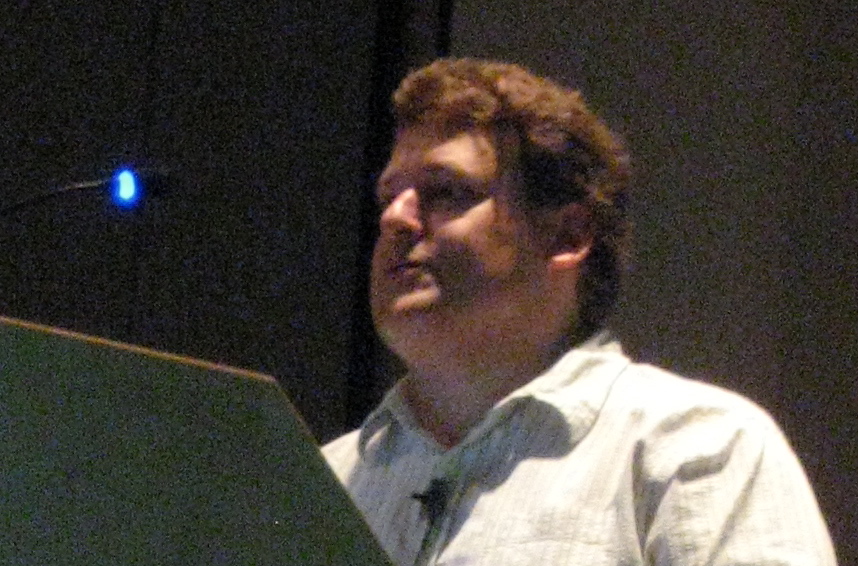
- in 2000
- in chapter 5 of his doctoral dissertation
Technical Generalities
- Client / Server
- Over HTTP
- Cache
- Verbs
- Status codes
- Stateless
Conceptual Generalities
- Collections
- Identified resources
- For machines and humans
REST vs SOAP
| REST | SOAP |
|---|---|
| Architecture | Protocol |
| Unique identification of resources | No identification of resources |
| Relies on transport | Transport agnostic |
| By discovery | By contract |
| Light & simple | Heavy & complex |
| For collections | For services |
Richardson's Maturity Model
- The level of REST implementation reflects the maturity of :
- Teams
- Products
REST level 0
Just a tunnel for remote invocation mechanism
POST /appointmentService HTTP/1.1

{ date: "2010-01-24", doctor: "martin" }
HTTP/1.1 200 OK

{ openSlotList: [
  { start: 1400, end: 1450, doctor: "martin" },
  { start: 1600, end: 1650, doctor: "martin" }
]}
POST /appointmentService HTTP/1.1
{
slot: { start: 1400, end: 1450, doctor: "martin" },
patient: { id: "brown" }
}HTTP/1.1 200 OK
{
slot: { start: 1400, end: 1450, doctor: "martin" },
patient: { id: "brown" }
}HTTP/1.1 200 OK
{
error: "Booking failure"
}
REST level 1
Start to talk to identifed resources
POST /doctors/martin HTTP/1.1

{ date: "2010-01-24" }
HTTP/1.1 200 OK

{ openSlotList: [
    { id: 1234, start: 1400, end: 1450, doctor: "martin" },
    { id: 5678 start: 1600, end: 1650, doctor: "martin" }
]}
POST /slots/1234 HTTP/1.1
{
patient: { id: "brown" }
}HTTP/1.1 200 OK
{
slot: { start: 1400, end: 1450, doctor: "martin" },
patient: { id: "brown" }
}REST level 2
Start to use HTTP verbs and status codes
GET /doctors/martin/slots?date=20100104&status=open HTTP/1.1
HTTP/1.1 200 OK

{ openSlotList: [
    { id: 1234, start: 1400, end: 1450, doctor: "martin" },
    { id: 5678 start: 1600, end: 1650, doctor: "martin" }
]}
POST /slots/1234 HTTP/1.1
{
patient: { id: "brown" }
}
HTTP/1.1 201 Created
Location: slots/1234/appointment
{
slot: { start: 1400, end: 1450, doctor: "martin" },
patient: { id: "brown" }
}REST level 3
Hypermedia As The Engine Of Application State
GET /doctors/martin/slots?date=20100104&status=open HTTP/1.1
HTTP/1.1 200 OK

{ openSlotList: [
    { id: 1234, start: 1400, end: 1450, doctor: "martin",
      links: [ {rel: "book", uri: "/slots/1234 } ] },
    { id: 5678 start: 1600, end: 1650, doctor: "martin" ,
      links: [ {rel: "book", uri: "/slots/5678 } ] } ]}
POST /slots/1234 HTTP/1.1
{
patient: { id: "brown" }
}HTTP/1.1 201 Created
Location: slots/1234/appointment{ slot: { start: 1400, end: 1450, doctor: "martin" },
patient: { id: "brown" }, links: [
{ rel: "self", uri: "/slots/1234/appointment" } ] },
{ rel: "cancel", uri: "/slots/1234/appointment" } ] } }Operations & HTTP verbs
| Operation | Verb | Example |
|---|---|---|
| Create | POST | curl -X POST -d '{patient: { id: "brown" }}' https://api.book-a-doctor.com/slots/1234 |
| Read | GET | curl -X GET https://api.book-a-doctor.com/doctors/martin/slots?date=20100104&status=open |
| Update | PUT | curl -X PUT -d '{name: "Martin", firstname: "John" } https://api.book-a-doctor.com/doctors/martin |
| Patch | PATCH | curl -X PATCH -d '{firstname: "Peter" } https://api.book-a-doctor.com/doctors/martin |
| Delete | DELETE | curl -X DELETE https://api.book-a-doctor.com/doctors/martin |
Querystrings
-
filter : filter to apply to elements to return
-
offset : index of first element to return
-
limit : maximal number of elements to return
-
sort : sorting of elements to return
This is just an example of a possible implementation. This is not standard.
Content negociation
-
Client's preferences are indicated in
Acceptheader (format, language, encoding, etc ...) -
Server answers as best as it can to client's expectations
Status codes
-
1XX : Information
- 100: Continue
-
2XX : Success
- 200: OK
- 201: Created
- 202: Accepted
-
3XX : Redirection
- 307: Temporary Redirect
- 308: Permanent Redirect
-
4XX : Client Error
- 400: Bad Request
- 401: Unthaurized
- 403: Forbidden
- 408: Request Time-out
- 418: I'm a teapot
-
5XX : Server Error
- 500: Internal Server Error
- 501: Not Implemented
- 503: Service Unavailable
Usefull links
Nobody understands REST : http://williamdurand.fr/2015/06/02/video-nobody-understands-rest
Webservices with Spring : http://spring.io/guides/tutorials/bookmarks/
It's your turn

Let's expose APIs !